
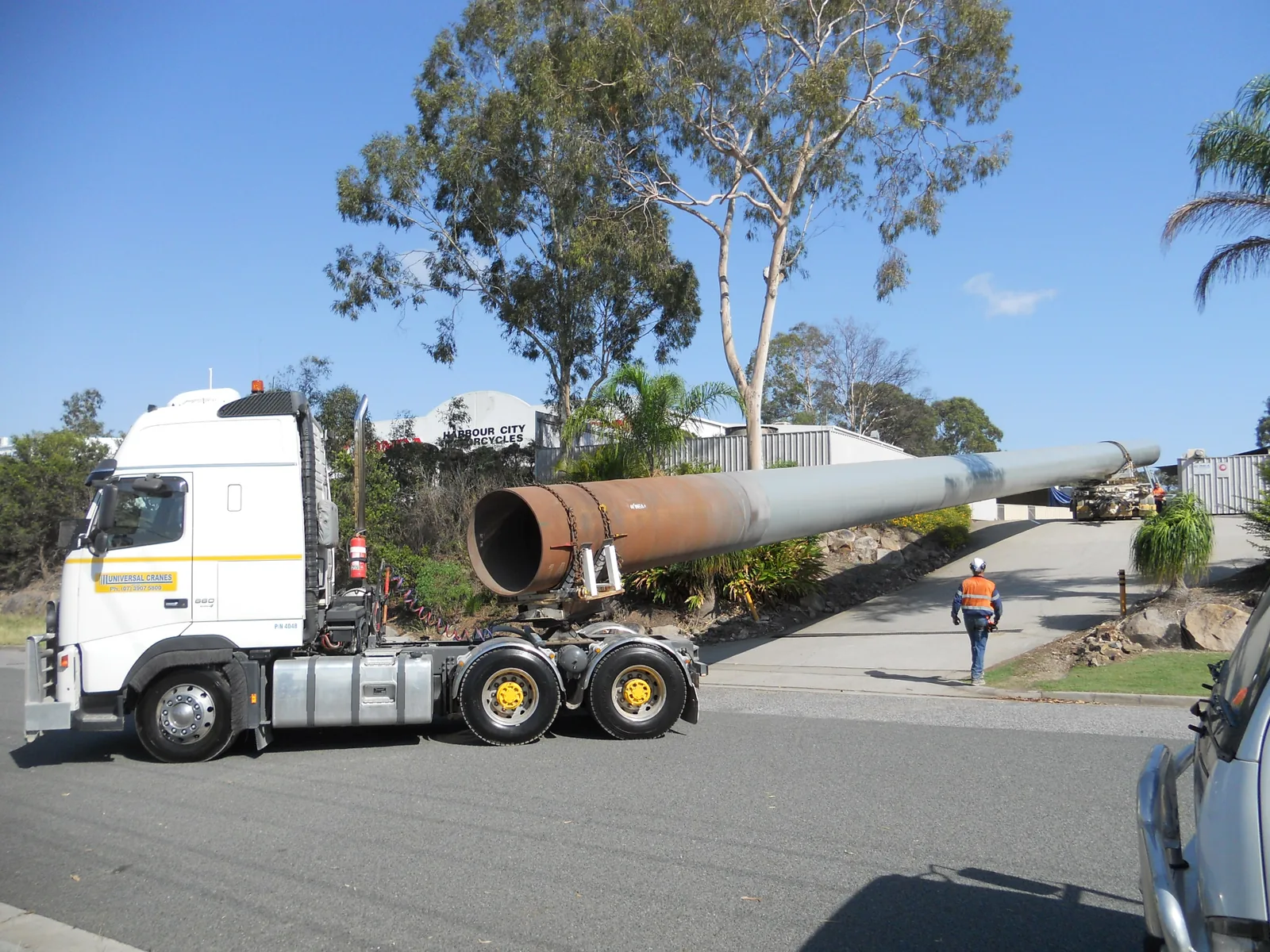
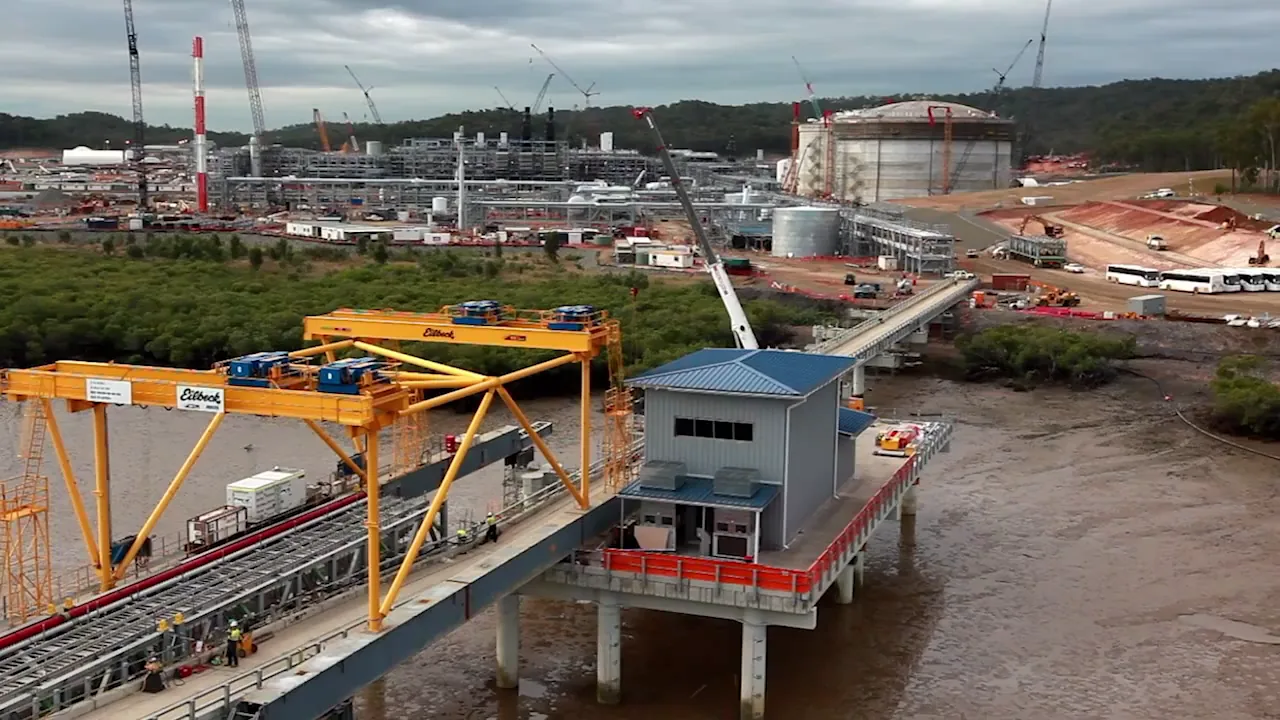
LNG jetty piles form the primary foundation system supporting the jetty deck, loading platforms, access structures, pipe racks and associated marine infrastructure. Installed into the seabed, they transfer vertical, lateral and uplift loads from the jetty into the underlying ground while resisting forces generated by vessel movements, waves, currents, wind and operational loading.
The piles must provide long-term structural stability, maintain accurate alignment during installation and withstand continuous exposure to corrosive marine conditions throughout the service life of the facility.
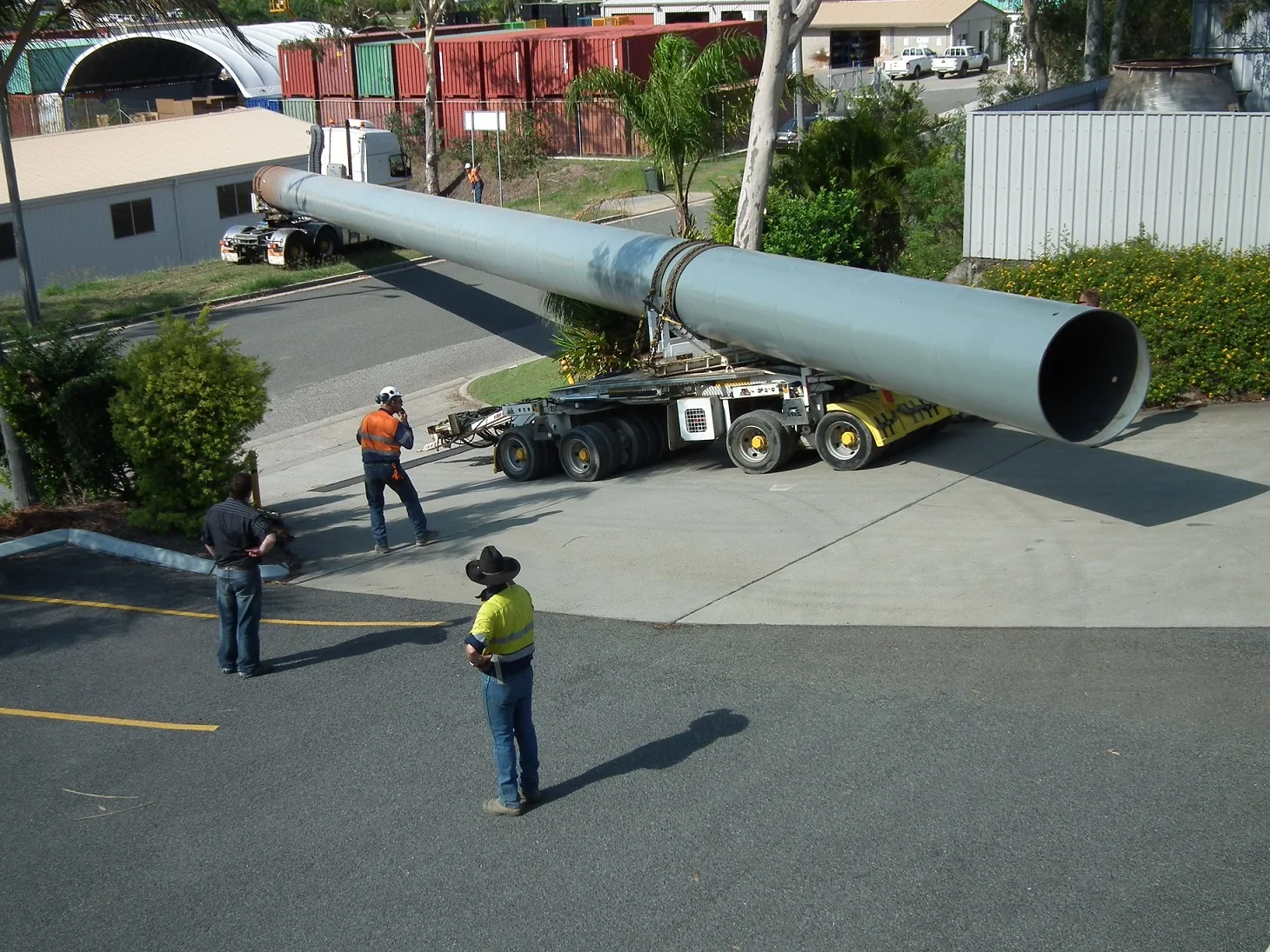
MEA was awarded the contract to manufacture the jetty piles for the Curtis Island LNG Wharf. The completed piles measured approximately 40 metres in length and 1.2 metres in diameter, requiring detailed fabrication planning, heavy handling arrangements and specialised transport coordination.
John Holland supplied MEA with a number of shorter existing pile sections, which were delivered to MEA's Gladstone workshop for modification and assembly. MEA removed all redundant external plates, attachments and components before preparing the individual pipe sections for joining. The sections were then accurately aligned and welded together to produce the full-length piles required for the jetty construction.
Due to the overall size of the completed piles, fabrication and handling were carefully sequenced to maintain alignment and dimensional accuracy throughout assembly. Following completion, the piles were fully abrasive blasted and coated using MEA's mobile blasting and painting enclosure, and the finished 40-metre piles required specialist heavy-haul transport, route planning and escort vehicles for delivery to the Curtis Island LNG site.
- Client: John Holland
- Sector: Oil, Gas & LNG
- Delivered from MEA Gladstone
On the floor.
A similar problem on your site?
Talk to the team that delivered this one.